
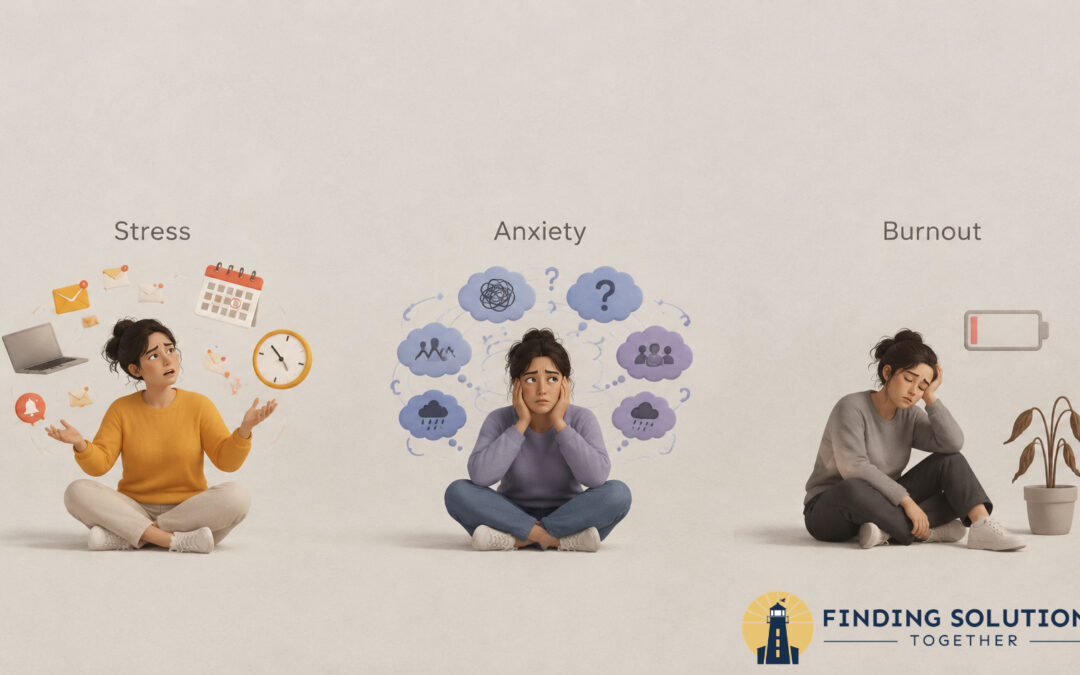
You wake up exhausted even after sleep, your mind is jumpy about everything, and at work you feel numb and detached. Sound familiar? It’s easy to use “stressed” as a catch-all. But stress, anxiety, and burnout are different experiences — and knowing which one you’re facing helps you choose the right, evidence-based steps to feel better.
What is stress (and how it shows up)
Stress is our body’s natural response to demands or threats. It’s usually tied to a clear trigger — a deadline, an argument, a major life change — and mobilizes your energy so you can address the issue. Common signs include muscle tension, racing heart, irritability, trouble sleeping, and trouble concentrating. When stress is short-lived and manageable, it can actually be helpful in getting us to respond to the stressful issue. But chronic, unmanaged stress harms physical and mental health.
What is anxiety (when worry becomes a problem)
Anxiety is a future-focused state of worry, tension, or fear that can occur with or without an obvious external trigger. Experiences of anxiety are common and a part of our survival nature. However, when anxiety is excessive or persistent it can interfere with daily life (work, relationships, sleep). Anxiety tends to be more about ongoing worry, hypervigilance, or panic, rather than the external situational pressure typical of stress.
What is burnout (work-related exhaustion and distance)
Burnout is a specific response to chronic workplace stress that hasn’t been successfully managed: emotional and physical exhaustion, increased cynicism or detachment from the job, and lowered performance and withdrawal. The World Health Organization recognizes burnout as an occupational phenomenon rather than a medical diagnosis — meaning it’s tied to the work environment and systems, not a personal failure.
Where they overlap — and why it’s confusing
Stress, anxiety, and burnout share many symptoms: exhaustion, sleep problems, irritability, trouble concentrating, and physical aches. That overlap is why it’s common to mislabel one for another. The difference usually lies in trigger, time course, and scope:
- Trigger: Stress is usually tied to an identifiable stressor. Example: I am caring for someone who is ill. Anxiety may come from internal worry and anticipation. Example: I am worried about becoming ill. Burnout is tied to ongoing work conditions. Example: I have been working under constant pressure with no breaks, and I feel ill.
- Time course: Stress is often short-term (though it can become chronic). Anxiety can be chronic and self-sustaining. Burnout develops over months or years of unresolved workplace stress.
- Scope of life impact: Burnout mainly shows up around work (though it spills into personal life). Anxiety and stress more often affect multiple domains.
If you feel stuck guessing, a helpful next step is to map when symptoms began, what usually makes them worse or better, and which areas of life are most affected.
Evidence-based things you can try today (and why they help)
Below are practical tools grounded in research. Pick 2–3 that feel doable and try them for 2–4 weeks.
- Short-term stress relief (physiological calm): box breathing, progressive muscle relaxation, or a 5-minute walk. These reduce sympathetic arousal and are quick to use when you feel overwhelmed. (Useful for stress and anxiety.) Check out a link to box breathing here: Box Breathing Exercise | Crisis Relief in UNDER 5min | Mental Fitness Techniques | Jeff Packer
- Cognitive strategies (CBT principles): Notice automatic “what if” thoughts, test them with evidence, and try balanced alternatives or practice :what is” instead. Cognitive-behavioral therapy (CBT) has a strong evidence base for treating anxiety and stress-related problems and therapists can help implement these strategies.
- Mindfulness: Mindfulness strategies produce small-to-moderate reductions in stress and anxiety and help improve present-moment awareness and experiencing rather then staying in future thoughts — useful when worry or rumination amplify symptoms.
- Behavioral activation & routine: When depression, anxiety, or burnout sap motivation, scheduling small, achievable activities (movement, social connection, meaningful tasks) helps rebuild energy and competence.
- Boundaries & renegotiation at work: For burnout, consistent individual self-care and boundaries help, but evidence shows organization-level changes and role adjustments matter most. If possible, discuss workload, role clarity, or flexible hours with supervisors.
- Sleep, movement, and nutrition basics: Regular sleep schedule, short daily movement (even 20 minutes), and balanced meals support emotional regulation and cognitive function. Chronic stress disrupts sleep and increases health risks.
- Social connection & small wins: Share how you feel with a trusted friend or colleague; name one tiny win each day (task completion, a kind interaction). Both counter feelings of isolation and helplessness.
When self-help isn’t enough — get professional support
Consider therapy if symptoms are persistent, getting worse, or interfering with work, relationships, or safety. People with trauma in their history often need professional support as trauma can compound these symptoms. Effective treatments include CBT for anxiety and stress-related problems, mindfulness-based therapies, and tailored approaches for burnout (which often combine individual therapy with workplace change). Learn more about our therapists here: Meet Our Team | Finding Solutions Together
You don’t have to label everything perfectly — but a clearer label helps choose better tools. Stress can often respond to short-term coping and boundary work; anxiety frequently benefits from structured therapy (like CBT) and sometimes medication; burnout usually needs both personal strategies/therapy and changes in the work environment. Whatever you’re facing, small consistent steps add up, and asking for help is not a sign of weakness – it is a smart step to take.
If this resonated, reach out to a therapist, talk with your supervisor about workload, or try one of the evidence-based tools above for two weeks. Share this post with someone who might need it — and if you’d like, contact us to set up a phone consultation with one of our experienced therapists. Contact | Finding Solutions Together
Reviewed and edited by Nicole Bolotenko RP (Registered Psychotherapist) at Finding Solutions Together.
Recent Comments